

WHY CHOOSE BREEDEN LAW OFFICE:
25
+Years of Experience
4
+Office Locations
20
+Attorneys and Staff Members
1,000
+Clients Served
300
+5-Star Reviews
Raleigh Divorce Attorneys
Every divorce is different, but there are common legal and financial issues almost everyone must address. These often include dividing property and debts, determining spousal support, and planning for life after marriage. That is why working with a knowledgeable family lawyer serving Raleigh is so important.
A divorce attorney can help explain:
- The legal requirements for divorce in North Carolina, including residency and living separate and apart
- Interstate divorces involving jurisdiction, residence, and service of process
- Eligibility and legal standards for annulment
- Marital misconduct, including affairs and alienation of affection claims
- Separation agreements and court-ordered “divorce from bed to board”
- Uncontested, simple, and collaborative divorce options
- Military divorces when one or both spouses are active duty or deployed
- Same-sex divorces or separations involving children
- Post-divorce modifications to alimony, child custody, child support, and other court orders
Grounds for Divorce in Raleigh, NC
North Carolina is a no-fault divorce state. You do not need to prove wrongdoing to end a marriage. Instead, you must meet the legal separation and residency requirements before filing.
That said, marital misconduct can still affect certain aspects of a divorce. If you believe your spouse engaged in misconduct, such as an affair, it is important to discuss this with your attorney. Adultery can impact alimony and may give rise to an alienation of affection claim against a third party in some cases.
Protecting Your Interests During a Divorce
Divorce follows a formal legal process in North Carolina. Raleigh-area divorces are handled through the District Court system, typically in Wake County. Having a divorce lawyer who understands local court procedures, filing requirements, and judicial expectations can make the process smoother and less stressful.
Marital vs. Non-Marital Property
One of the first issues in any divorce is determining which assets are marital and which are separate. Generally, property acquired during the marriage is considered marital property, though exceptions apply. Gifts or inheritances received by one spouse may remain separate property if properly documented.
Division of Property and Debts
North Carolina courts divide marital assets and debts using an equitable distribution standard. While an equal split is possible, the court may divide property differently based on factors such as income, contributions to the marriage, and financial need.
Debt division can be especially contentious. Mortgages, vehicle loans, medical bills, and credit card balances must all be addressed, even if only one spouse incurred the debt.
Alimony
There is no automatic right to alimony in North Carolina. Courts may award spousal support when there is a substantial income disparity between spouses and other legal factors are met.
There are different types of spousal support, including:
- Post-separation support, which provides temporary financial assistance during the separation period
- Alimony, which is paid after the divorce is finalized
Spouses may reach their own agreement on alimony, but if the issue is contested, a Raleigh divorce lawyer can represent your interests during court proceedings.
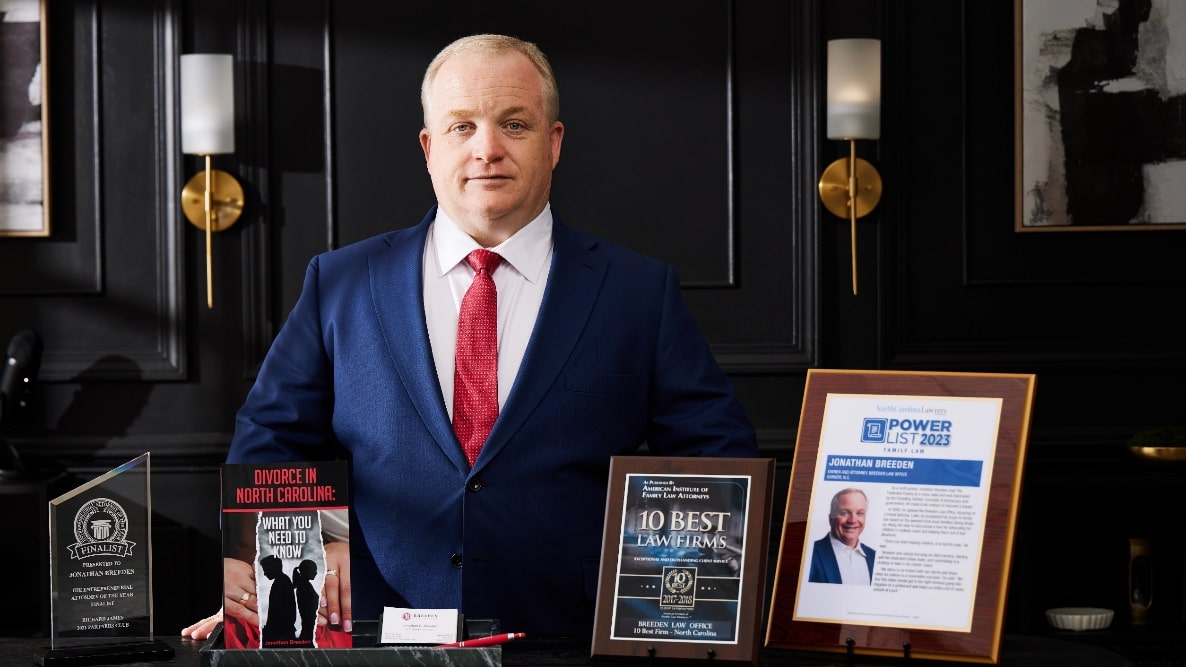
Divorce in North Carolina
Divorce can be complicated, but our Angier divorce attorneys can explain the process and what you can expect.
Watch Video
Filing for Divorce in Raleigh, North Carolina
Most Raleigh residents file for divorce in Wake County, though filing location depends on where each spouse lives. The process begins by completing the required Divorce Packet and filing a Complaint with the Clerk of Court.
The Complaint outlines basic facts about the marriage and separation and formally asks the court to dissolve the marriage. After filing, your spouse must be legally served with the divorce papers. They have 30 days to respond before the case can move forward.
Some divorces require only one hearing, while others involve multiple hearings depending on unresolved issues. A district court judge will review evidence and hear testimony before issuing rulings.
Divorces Involving Minor Children
For parents, child custody and child support are often the most important and emotionally charged aspects of divorce.
North Carolina law requires custody and visitation arrangements to serve the child’s best interests, whether decided by a judge or agreed upon by the parents. If custody is a concern, working with a Raleigh divorce attorney can help you develop a parenting plan that reflects your child’s needs and protects your parental rights.
If an agreement cannot be reached, your lawyer can help build a strong case for court.

Related Divorce Topics
Raleigh Divorce Resources
Ending a marriage affects many aspects of daily life. The following types of resources in the Raleigh area may be helpful during and after a divorce:
- Wake County Schools
- Credit counseling services
- Domestic violence support and hotlines
- Divorce financial professionals
- Parenting and co-parenting support groups
- Therapists and counselors in the Raleigh area
- Real estate professionals
- Moving companies
- Name change and utility transfer resources
The Divorce Process in North Carolina
The divorce process can feel overwhelming if you have never been through it before. Below is a general overview of what to expect.
Divorce Packet and Complaint Filing
Raleigh-area divorces are typically filed in Wake County District Court. The process starts with completing the Divorce Packet and filing the Complaint with the Clerk of Court. Once filed, the divorce papers must be properly served on your spouse.
After service, your spouse has 30 days to respond, and the court will address any unresolved issues.
Divorce Hearing
At the hearing, a district court judge reviews evidence and hears arguments related to property division, support, custody, or other contested matters. Some cases involve multiple judges if different issues are handled separately. An experienced divorce lawyer can guide you through each stage and ensure your interests are represented.
Consider Mediation for Your Divorce
Many couples choose mediation to resolve disputes without prolonged litigation. Mediation is a form of alternative dispute resolution that encourages cooperation and compromise.
During mediation, a neutral third party helps identify issues and guide productive discussions. Mediation can reduce costs, speed up the process, and give both spouses more control over the outcome.
How a Raleigh Divorce Attorney Can Help
Divorce is rarely easy, even when both parties are cooperative. When children, finances, and long-term planning are involved, legal guidance becomes even more important.
Attorney Jonathan Breeden can advise you on:
- Residency and separation requirements for divorce
- Annulment as an alternative to divorce
- Separation agreements and divorce from bed to board
- Simplified divorce options when major issues are not disputed
- Interstate divorce issues, including jurisdiction and service of process
A Raleigh-area family law firm helps you negotiate favorable terms, protect your finances, and prepare for life after divorce. If negotiations fail or disputes escalate, having a skilled attorney in court can make a critical difference.
CALL BREEDEN LAW OFFICE TODAY:
(919) 661-4970Hear from Our Clients
Breeden Law offered exceptional service. I felt extremely comfortable talking with Jonathan and the office staff was pleasant and organized.

Mr. Breeden was very professional. He gave me honest input regarding possible outcomes of my case. He was very responsive when I had a question and when responding to emails. He knows custody law very well and got me exactly what I wanted with regards to my case. I would definitely use him again if needed.
A custody battle is never easy; even harder when you are a grandparent seeking custody. Jonathan Breeden handled our case with great diligence, but oh so delicately. I received full, permanent custody, with no harsh feelings from any parties concerned. Together with Jonathan, there was even suitable visitation arrangements made.